
Why High School Seniors Fall Apart (When It’s Not Just "Senioritis")
By Lisa Miller
Here I am, in a meeting with yet another exhausted parent whose high school senior has suddenly stopped turning in assignments, started skipping classes, and seems to have completely checked out.
"They were fine until now. It's senioritis," the parent says with a resigned shrug. "Right?"
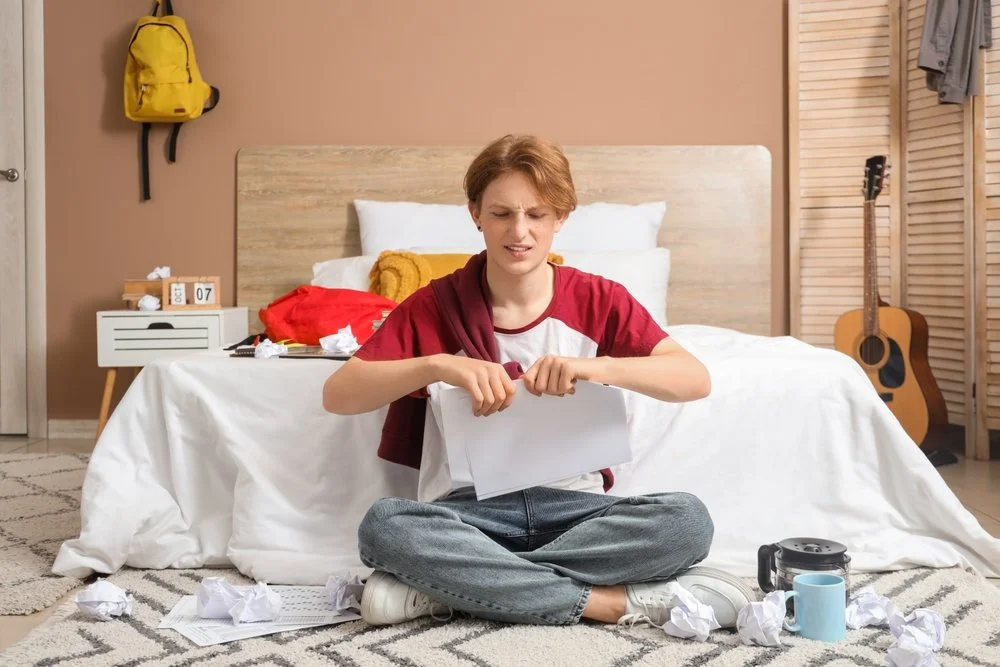
Maybe. But also...maybe not.
Because what we call senioritis (that stereotypical senior-year slide into apathy and minimal effort) is sometimes masking something deeper (and painful). If we dismiss it as "just senioritis," we miss the chance to actually help our kids through one of the hardest transitions of their lives.
For many seniors, "falling apart" isn't laziness or apathy. It's exhaustion, burnout, fear, self-protection, or even self-sabotage. And those things require a thoughtful approach.
Here are some things that might be going on:
They're burned out (like, actually)
They’re running on fumes. AP classes, extracurriculars, test prep, college apps, maintaining a social life, trying to sleep—all while their brains are still developing–has depleted them. By senior year, they've hit empty. Their nervous system is tapped out.
This isn't laziness. It's collapse.
They're terrified of what comes next
High school has structure, rules, and a clear, known path. College? Adulthood? That's terrifying. They might be thinking:
What if I fail?
What if I don't make friends?
What if I picked the wrong school?
What if I'm not ready?
What if I don't know who I am without the structure of high school?
Fear can masquerade as apathy.
They're self-sabotaging (due to see above)
If you're terrified of failing, one way to protect yourself is to fail on purpose. Then it's not "I wasn't good enough." It's "I didn't try." Self-sabotage is a trauma response. It's the brain saying: "I'd rather control my own failure than be blindsided by it."
They're grieving (even if they don’t realize it)
Senior year is full of "lasts." Last homecoming. Last season. Last time with this friend group. They're leaving behind childhood, family routines, and the safety of home. Even if they're excited to graduate and be done with high school, there's grief in that loss. And teenagers don't always know how to process grief. So it shows up as shutdown or acting out.
Whatever the reason, your kid is probably feeling a combination of shame, overwhelm, and exhaustion. Here are some things to try:
Ask what’s going on. Not in an accusatory way. In a genuinely curious, I-want-to-understand way. Lean into wonder-based parenting.
Validate their struggle, “Senior year is hard. You've been working so hard for so long. It makes sense that you're exhausted."
Avoid language like:
"You just need to power through."
"Everyone deals with this."
"You're almost done, just finish strong."
Instead, try:
"This is a lot. I see how hard this is."
"What would help right now?"
"It's okay to not be okay."
Adjust your expectations. Maybe “good grades” aren't the goal right now. Maybe the goal is to finish with passing grades, maintain mental health, and get to graduation without completely flaming out. We’re not lowering standards–we’re being realistic about capacity.
Help them rest and recover. Seniors need sleep, downtime, permission to say no to things, and space to process emotions. Burnout doesn't heal with productivity. It heals with rest.
Seek professional help if needed. If your senior is showing signs of depression or anxiety, engaging in risky behaviors, struggling to function day-to-day, or talking about self-harm or not wanting to be here, get help! This is not something they can or should push through. A skilled therapist or coach will help them through this tricky transition period.
Remind them that there is no one “right path.” They get to choose, and there are so many options (gap year, community college, trade school, taking time off, working). The narrative that everyone must go straight to a 4-year college is exhausting and limiting. Help them see options. Give them permission to choose what actually fits.
Senior year falling apart isn't always "senioritis." Sometimes it's:
A nervous system that's been pushed too hard for too long
Fear of an unknown future
Self-protection disguised as apathy
Grief over what they're leaving behind
A brain that's still under construction
And all of those things deserve compassion. Ask yourself: What does my kid need right now? Then follow their lead!